
- Date
- 29 September 2026
- Category
- Engineering
- Reading time
- 4 minutes
Risk Management: Engineering Oversight During Ro-Ro Loading of Heavy Equipment
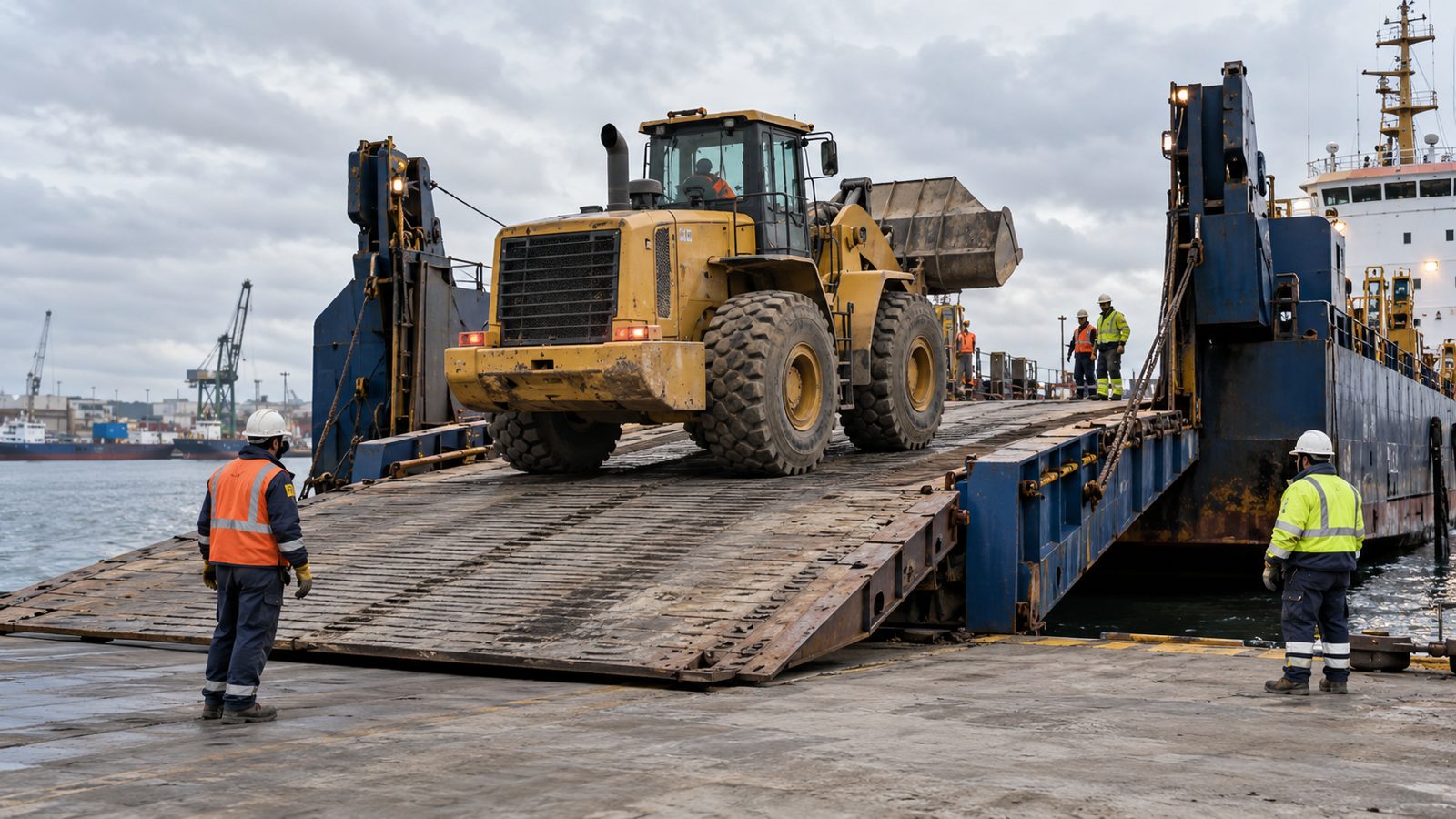
Ro-Ro operations can be used for self-propelled equipment and cargo on wheels or tracks. However, the fact that a unit can drive onto a vessel or barge does not, by itself, establish that the operation is safe. Before work begins, the travel path, ramp, quay, deck and cargo load distribution must all be assessed.
Checks before the equipment moves
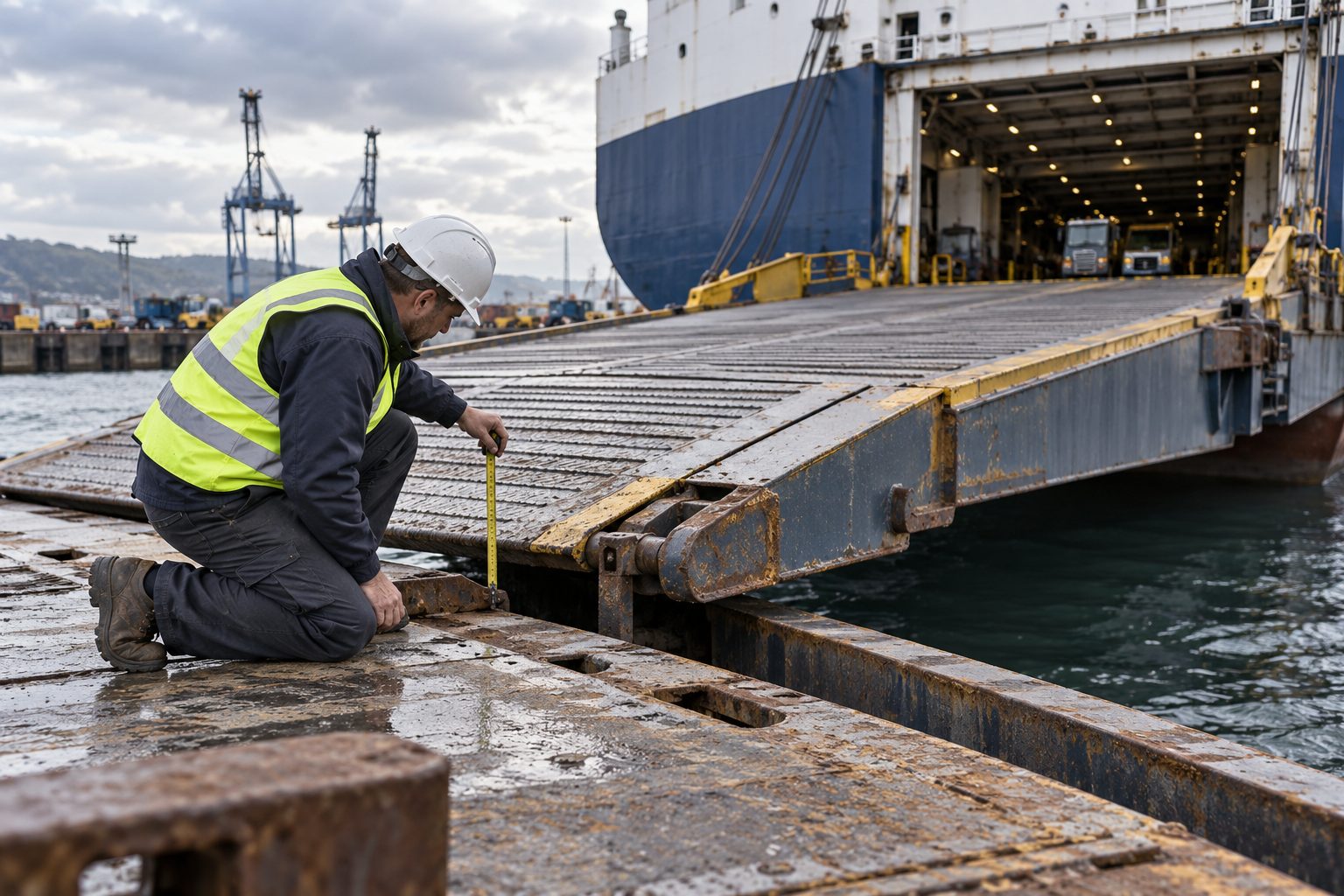
The assessment needs the actual cargo weight, axle or track loads, dimensions, ground clearance, turning radius and centre of gravity. These are compared with the allowable loads for the ramp, quay and vessel. The team must also review the clear width, gradients, level changes and condition of the running surface.
For a barge operation, its position alongside the berth and required draft are agreed in advance. Ballasting may be needed to maintain the required trim and ramp landing height throughout the roll-on. The ballast plan must be calculated for the actual site and loading condition; there is no one-size-fits-all setting.
Control during the Ro-Ro operation
Engineering oversight verifies that the travel path is ready and helps ensure that the actual operation follows the approved plan. The stevedoring company carries out cargo operations within the agreed allocation of responsibilities. The roles of the equipment operator, banksmen and personnel authorised to stop the operation should also be defined in advance.
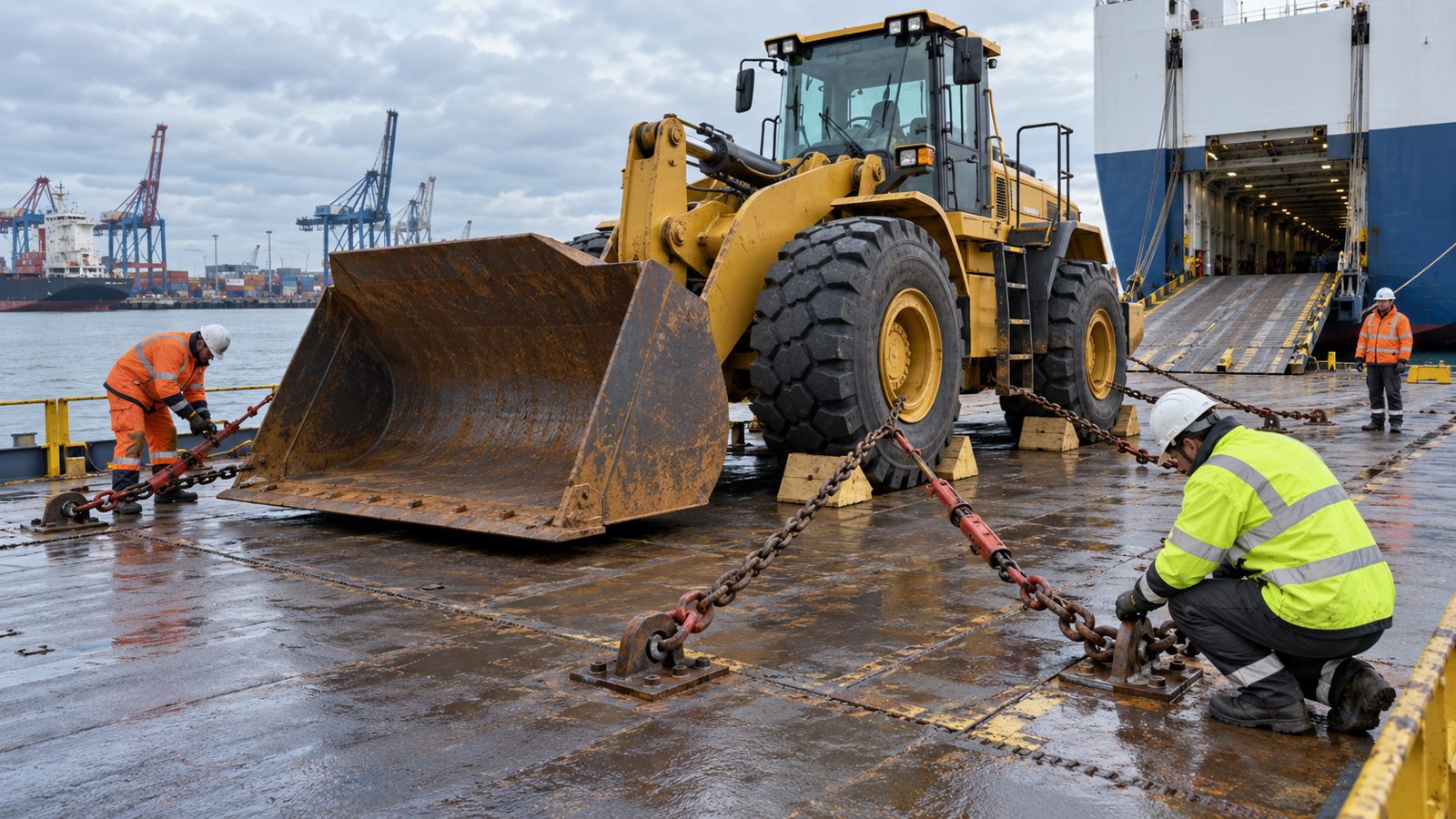
During movement, the team monitors speed, equipment position and the condition of transition structures. If the barge shifts, weather changes, an obstruction is found or the operation departs from the agreed method, work should stop until the situation has been reassessed. Once positioned, the cargo is secured in accordance with the approved sea-fastening arrangement and voyage loads.
Recording and managing risk
Photographs and records from each stage help document the condition of the cargo, ramp and securing arrangements. Insurers’ requirements depend on the policy and the project, so the required evidence should be agreed with the insurer or insurance broker in advance. Engineering oversight supports a documented process but does not replace confirmation of insurance cover.
Poseydonia coordinates engineering preparation and key stages of Ro-Ro operations, bringing the cargo owner, terminal and carrier together. The scope of supervision and calculations depends on the cargo weight, site configuration and route conditions.
Was this article helpful?



Send a request